
Artist in Profile | Mixed-Media, Relief Artist Kalani of Altūm Gallery
November 2026
For interior designers, architects and art curators looking for statement art, we are delighted to introduce Kalani, the artist behind Altūm and her eye-catching mixed-media, geometric relief art to our range.
Altūm comes from Latin and refers to height, depth and profoundness, for Kalani, it reflects the depth and dimension of her 3D relief work.
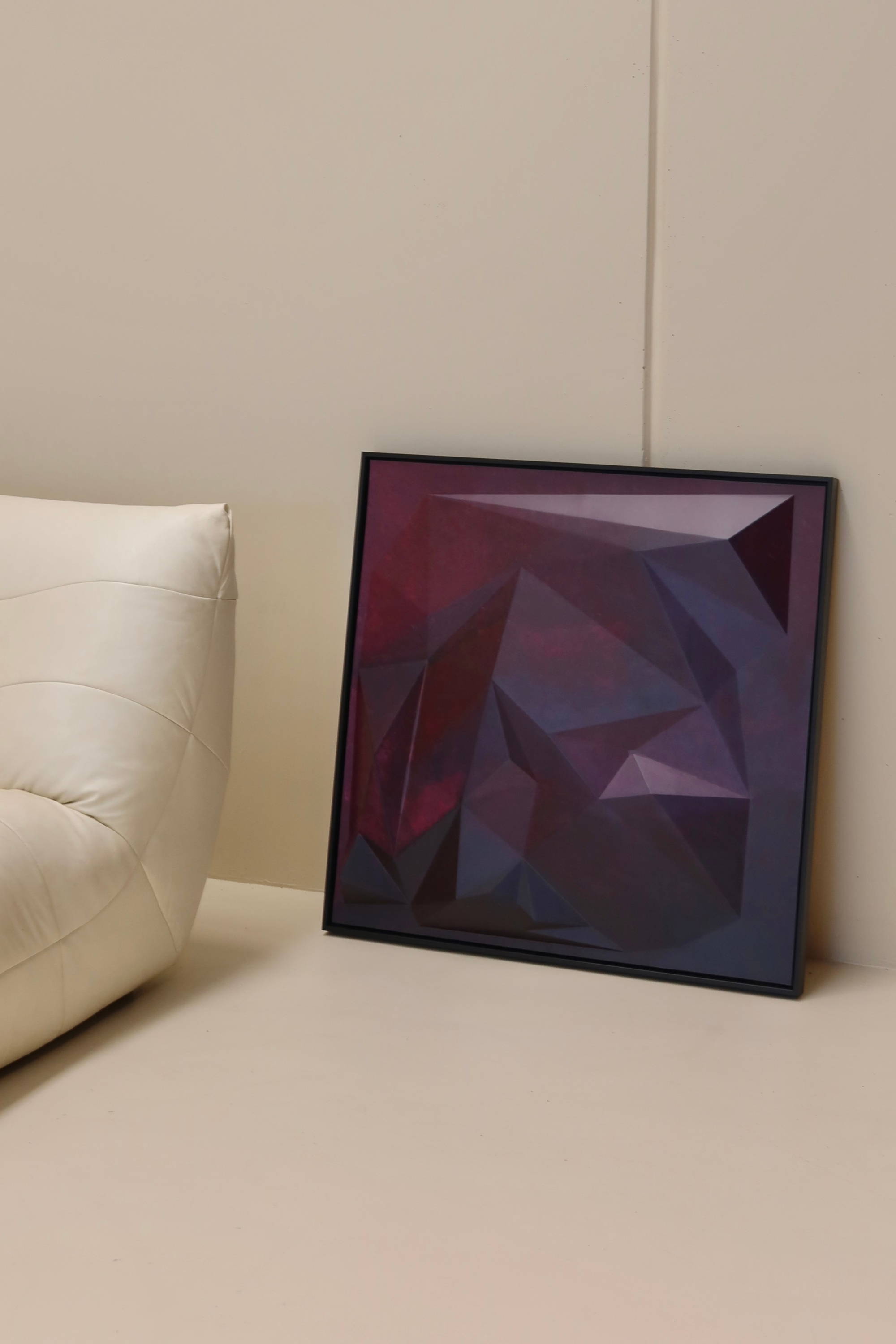
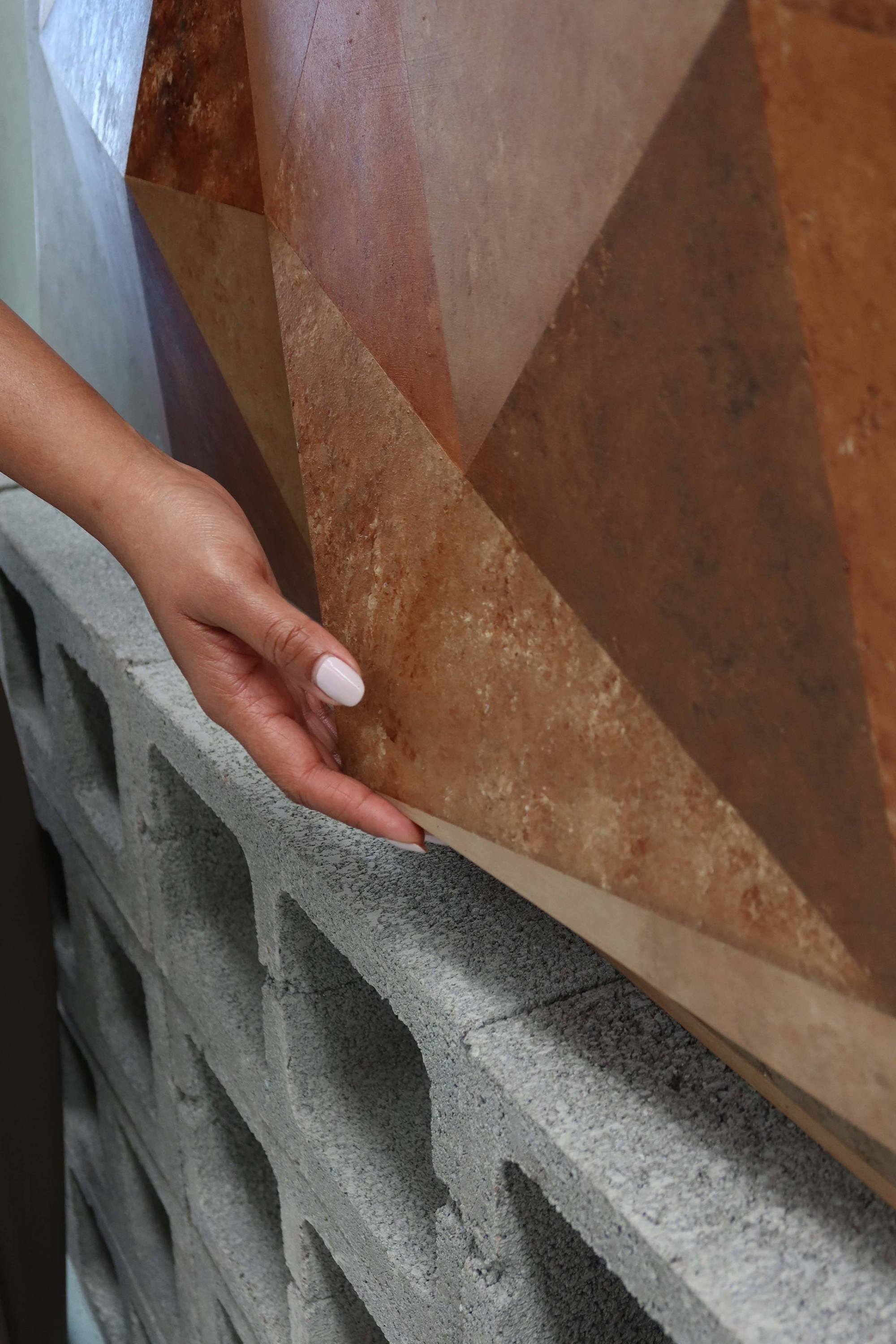
Kalani's art that sits between painting and sculpture, bringing together precise form and hand-painted texture. These original artworks are the perfect addition to interiors looking to introduce sculptural wall art and for art collectors who are drawn to unique, one-off mixed media art.
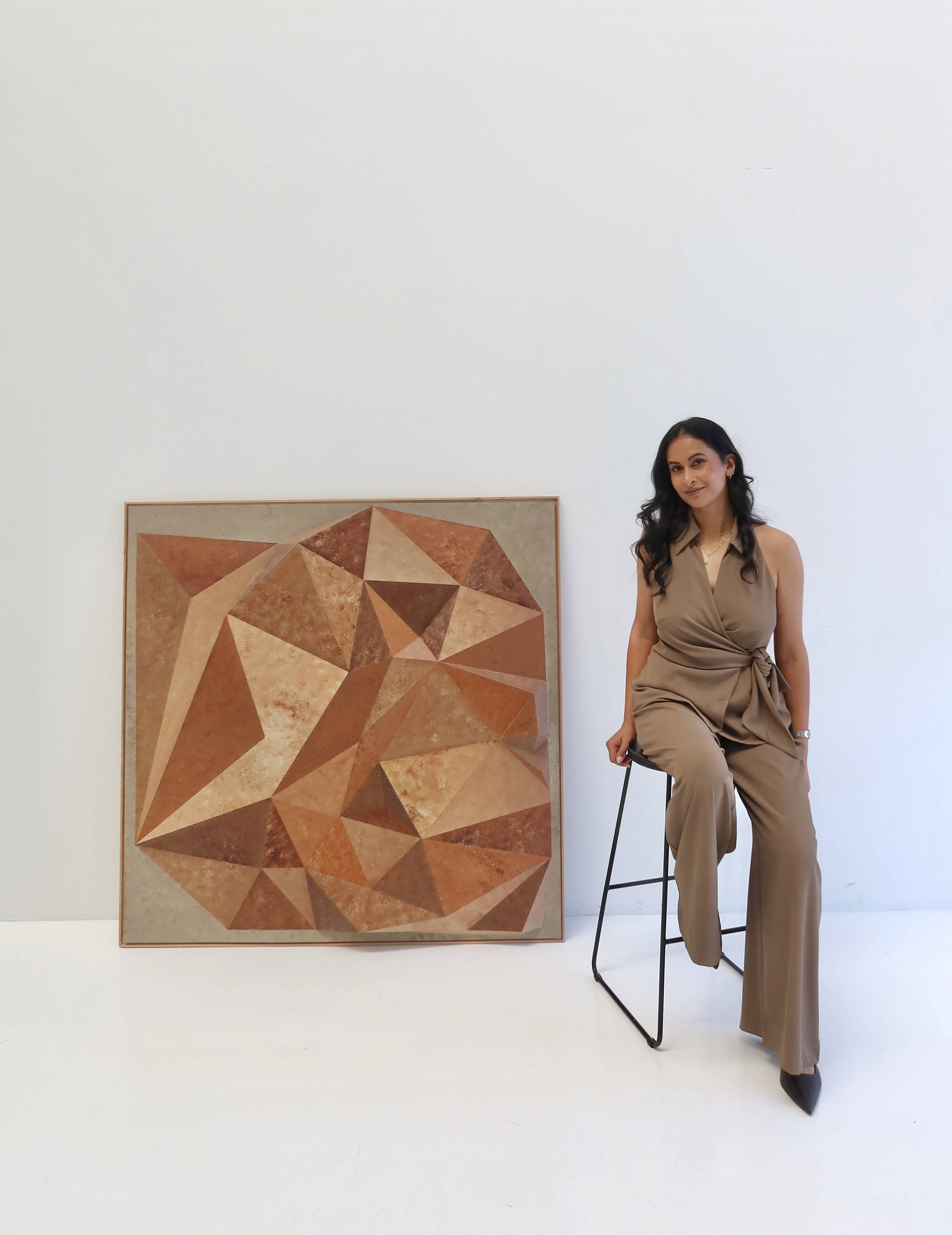
Kalani's angular works take inspiration from brutalist architecture, engineered precision and minimalism.
"I find real beauty in engineering excellence. I am drawn to the flaws as much as the perfection; the edges you cannot get from a machine; organic irregularity inside precision engineering. That's where my work lives."
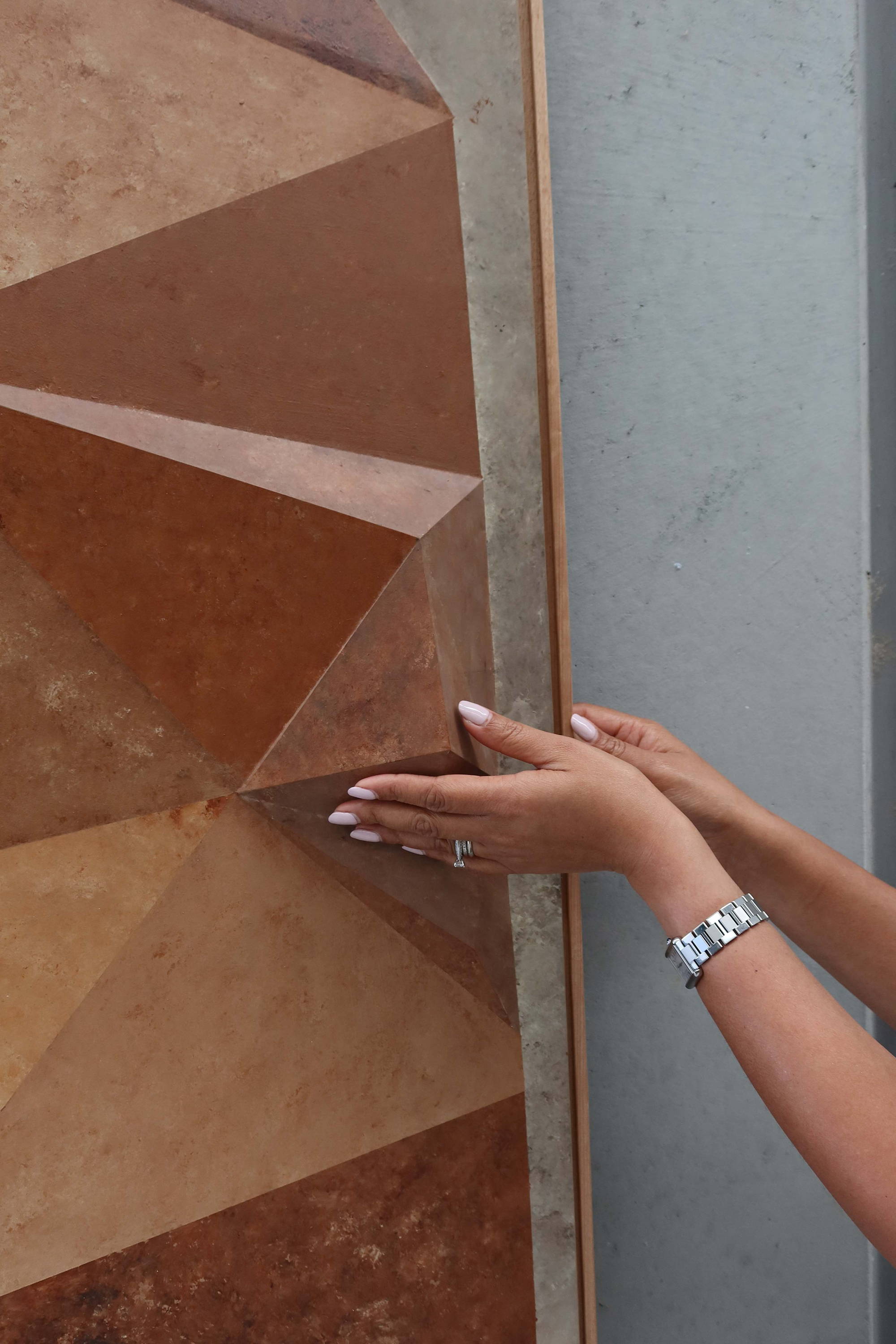
We caught up with Kalani, contemporary artist behind Altūm to find out more about her work.
How did you begin creating sculptural relief art?
It began during Melbourne’s COVID lockdowns. Our little lockdown bubble wanted to make something together, and we ended up building a dimensional artwork by hand. At the time, I was interested in how the eye combines fragments of colour into an image. Adding depth became a way of exploring that, but the result surprised me. The piece changed with the light and with where you stood. That stayed with me.
Later, when my family moved to Singapore, we lived opposite ION Orchard. I watched its façade throughout the day and became fascinated by how light could transform the same building. I wanted to bring that behaviour into a home: a surface that keeps changing as you live with it.
Those two experiences eventually became Altūm. I loved the idea that an artwork could have the physical presence of sculpture while occupying the space of a painting.
You’ve mentioned that your works have an architectural influence, what other inspiration do you look to when beginning a new artwork?
Light is often my starting point. I notice how it falls across everyday surfaces, where a shadow settles, or how a colour becomes something quite different in the evening. Those small observations can lead to a whole composition.
I’m also drawn to the relationship between precision and imperfection. Yohji Yamamoto’s thinking resonates with me, particularly the value he places on the human qualities within something carefully made. My forms begin with very precise geometry, but painting them is intuitive. My mood, decisions and changes of mind become part of the surface.
More recently, nature and my Buddhist background have become important to the ideas I’m exploring. I’m interested in how something can appear still while constantly changing. Relief gives me a very physical way to express that.
Tell us about your materials and process; these dimensional works must take a lot of time, from ideation to completion.
Every piece begins with its three-dimensional form. Using custom-built software developed with my husband, Sunny, I work through the geometry and simulate how light will move across it. I consider depth, viewing angles and the relationship between the more dramatic planes and the quieter areas around them.
That stage alone can take days.
The relief is then constructed and assembled, with several stages of surface preparation before it becomes the canvas I paint on.
I use acrylics and paint each facet by hand. This is the most intuitive part of the process. I’ll live with the piece in different lighting conditions, adjusting colours and repainting areas until the balance feels right. A facet that works beautifully in daylight can become much more dominant at night.
The final step is a professionally applied two-pack matte finish. The time involved varies with scale and complexity, but every work goes through that same dialogue between precise construction, hand-painting and light.
Do you have shapes and colour palettes in mind when creating each artwork?
Usually, I begin with a direction: a colour relationship, a feeling, or a particular movement through the composition. The geometry gives that idea a structure, but I leave room for the painting to develop.
With Altūm, I’m moving towards more abstract geometric work. I’m interested in taking a photograph as a starting point, drawing out its main colours and using them to develop an abstract composition in relief.
With relief, choosing a colour also means considering the angle it sits on. Two facets painted in exactly the same colour can look completely different because one catches the light while the other falls into shadow. So the palette and the form have to develop together.
I think of certain facets as characters. There might be a hero drawing your attention, another competing with it, and quieter areas giving both room to breathe. I’m constantly adjusting that relationship.
Each artwork has its own geometry, created for that piece alone. I want the form and the painting to belong to one another.
We’d love you to share a bit about your latest collaborative art series, how did this idea and concept come about?
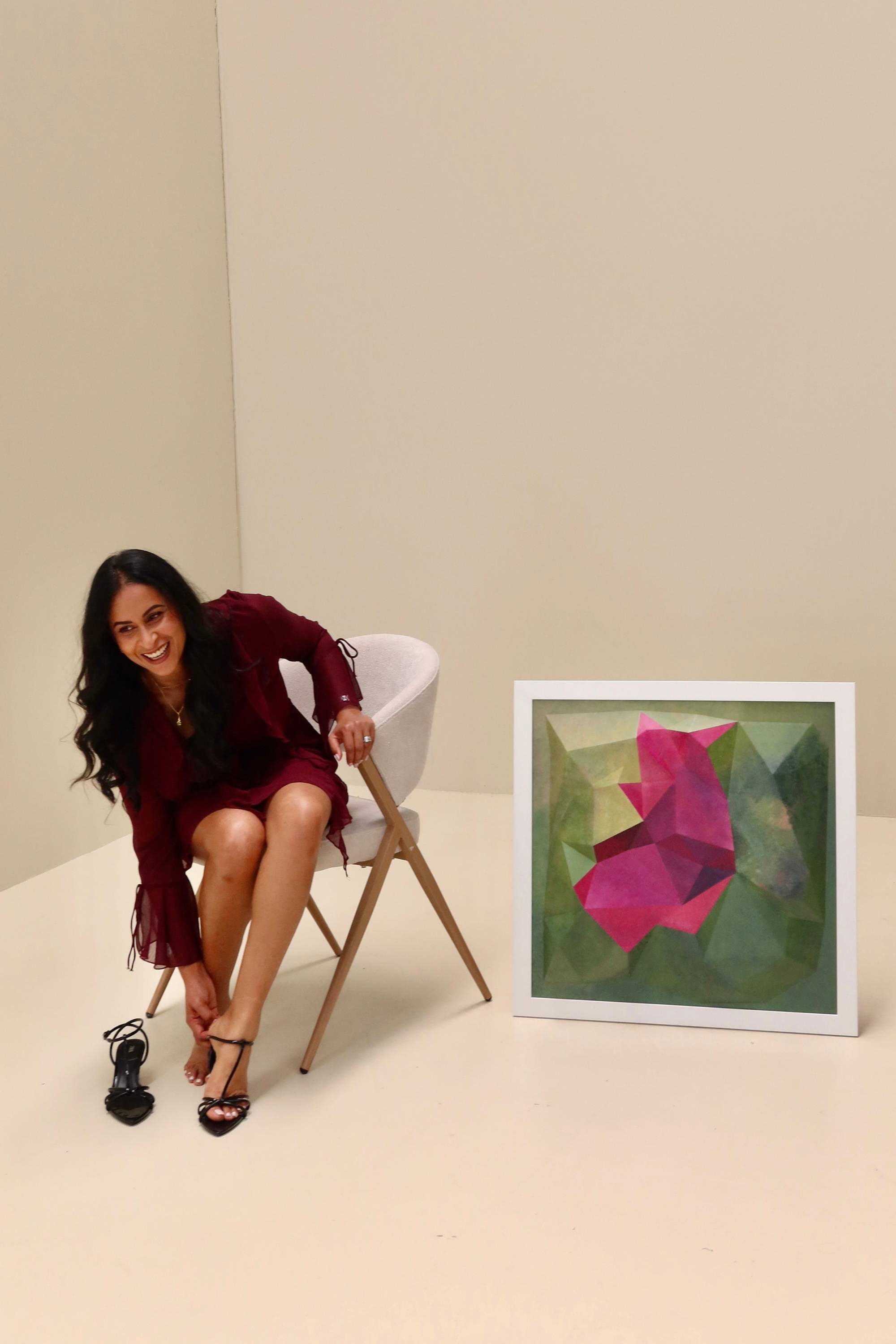
My latest series, Impermanence, began through a collaboration with a Japanese photographer whose work centres on nature. Our conversations became quite deep and meaningful, and I felt a strong connection between his sensitivity to his subject and what I wanted to explore through relief.
The first work begins with his photograph of a flower. I’ve kept the flower itself flat, surrounded by intricate dimensional geometry. That relationship allows the focus to shift with the light. In daylight, the flower draws you in. At night, the surrounding relief becomes more prominent, and the flower can seem to recede.
The idea connects with the Buddhist understanding of impermanence, something that is personally meaningful to me. I wanted to express that change is already happening, even within a moment that appears still.
Photography holds a moment, while the relief continues to respond to its surroundings. Bringing those qualities together felt like a natural way to explore the idea. The viewer encounters the same artwork again, but the experience is always slightly different.
Whether you are sourcing sculptural wall art for a residential interior or a statement piece for corporate spaces, these distinctive, one-of-a-kind artworks from the Altūm collection bring an intriguing combination of geometry, texture and dimension to thoughtfully designed spaces.
For enquiries about available artworks, or to commission one of these exceptional contemporary Australian artworks for your next interior design or architectural project, we invite you to get in touch with our team to discover more about the Altūm collection. Explore these works with FRAMING TO A T, Melbourne stockists of Kalani, the artist behind Altūm.
For enquiries please contact online@framingtoat.com.au or visit your nearest FRAMING TO A T Melbourne store location.